Breed Guide
Arthritis in Labradors: The Weight Connection Nobody Wants to Hear About
Labrador arthritis runs on three rails: joint genetics, a famous appetite, and extra pounds. The lifetime feeding study is worth 1.8 years, not two — here is what it actually showed, and what to do with it.

Arthritis is one of the most common ways a Labrador's later years go wrong, and the strongest lever against it is not a supplement — it is the amount of food in the bowl. In the lifetime study that followed 48 Labrador littermates from eight weeks of age until death, the dogs fed 25% less lived a median 1.8 years longer, with delayed onset of late-life disease and especially of osteoarthritis. That number is smaller than the "two years" you will see quoted, it is still bigger than anything else on this page, and it comes with conditions worth knowing.
Affiliate disclosure: Dog Orthopedic is reader-supported. When you buy through links on our site we earn a commission at no extra cost to you — about 3% on most pet products, and the same rate on every product we compare, so no pick earns us more than another. Prescription medication earns us nothing, and seeing your vet earns us nothing; we recommend both anyway. Learn more.
Imagery: Lifestyle photographs on this site are licensed from Pexels (royalty-free) and credited per image. Pexels imagery illustrates conditions and contexts — it does not depict the specific dogs or test sessions described in the text. Product photographs come from Amazon's Creators API. Breed portraits are illustrations of typical breed type rather than photographs of individual dogs, and are not drawn to scale against one another.
Why do Labradors get arthritis so often?#
Three rails run under this breed's joint problems, and they compound.
The orthopedic genetics. Osteoarthritis is this breed's single strongest recorded predisposition. In UK primary-care records comparing 1,462 Labradors against 20,786 other dogs, osteoarthritis had the highest odds ratio of 35 disorders examined, at 2.83 (95% CI 2.21–3.62).[1] Underneath it sit the two joints the breed inherits badly. Of 13,125 Labradors screened in Sweden between 2007 and 2016, 16.2% graded C to E for hips — the dysplastic range — and of 13,057 screened for elbows, 9.0% graded ED 1 or worse.[2]
Elbows deserve particular mention, because they are underdiagnosed and because this breed carries an extraordinary risk. In a study of 455,069 dogs under UK primary care, elbow joint disease had a one-year prevalence of 0.56% overall — and the Labrador's multivariable odds ratio was 5.94 (95% CI 4.65–7.60).[3] And the front legs are where the weight is: measured on a pressure walkway, standing Labradors carried 69% (±5%) of their body weight on the forelimbs, against 62% (±2%) in German Shepherds.[4] Front-end stiffness in a middle-aged Lab is elbows until a radiograph says otherwise. If your Lab already has a hip diagnosis, our hip dysplasia guide covers that road in detail.
The appetite. This is the genuinely breed-specific part. Cambridge researchers sequenced obesity candidate genes in Labradors and found a 14-base-pair deletion in POMC, disrupting the coding sequence for β-MSH and β-endorphin, at an allele frequency of 12%. Each copy was associated with greater body weight, greater adiposity and greater food motivation, and among other breeds the deletion turned up only in the closely related flat-coated retriever.[5] Your dog is not greedy; a meaningful minority of this breed is wired. The practical consequence is that a Lab will always vote for more food, and the vote does not mean hunger.
The third rail is us. Take a breed that always says yes to food, add treat-based training and those eyes. In VetCompass records of 2,074 Labradors under UK primary care, overweight or obese was the second most commonly recorded disorder in the breed at 8.8% (95% CI 7.6–10.1) — and note that is what a vet wrote down, not what a scale would find.[6] We looked for a published league table putting Labradors at the top of a breed obesity ranking and did not find one we could quote, so we are not printing that claim.
Extra weight hurts joints twice. It adds mechanical load, and fat tissue itself is endocrine: in 26 overweight dogs put through a weight-loss programme, plasma TNF-alpha, haptoglobin and C-reactive protein all fell measurably, along with insulin resistance.[7] The fat is not inert padding. It is a source of the inflammatory signalling that makes an arthritic joint hurt more.
For what arthritis actually is inside the joint, and every treatment tier from weight to prescription injections, see our arthritis master guide. For the whole-lifespan orthopedic profile of the breed — screening ages, elbow grades, neuter timing — see Labrador retriever joint problems. This page is the arthritis playbook.
What is the evidence that weight matters this much?#
The centerpiece is one of the most remarkable studies in veterinary medicine, and it deserves reporting properly rather than as a slogan.
Forty-eight Labradors from seven litters were paired at six weeks by sex and weight. From eight weeks of age until death, one dog in each pair was fed 25% less of the same food than its pair-mate. Same genetics, same environment, one variable.[8] The restricted dogs lived a median 1.8 years longer, with delayed onset of late-life disease, especially osteoarthritis.[9][10]
And the joint effect was not subtle. Median age at first radiographic evidence of hip osteoarthritis was 6 years in the control-fed dogs against 12 in the restricted ones — while across the whole cohort, prevalence climbed from 15% at two years to 67% by fourteen.[11] Six years of hip comfort, from a scoop.
Now three caveats, because this study is misquoted constantly and every misquote runs in the flattering direction.
It is 1.8 years, not two. Small point, but we had "roughly two years" on this page and it is worth being exact about the one number everybody repeats.
It was lifetime restriction from puppyhood. The feeding difference began at eight weeks and ran until death.[8] Slimming a heavy eight-year-old is a different intervention, and it has its own — smaller — number. Across 11,867 client-owned Labradors, overweight body condition in middle age carried a hazard ratio for death of 1.83 (99.79% CI 1.54–2.17) against normal condition.[12] Both numbers are true; they measure different things. Our whole-breed profile works through the full set of caveats, including the body condition scores the two groups actually held.
It did nothing measurable for elbows. This matters more in this breed than anywhere, because the elbow is its biggest structural predisposition. In the elbow-specific analysis of the same 48 dogs there was no statistical difference in radiographic osteoarthritis frequency between the feeding groups at any time point, no difference in histopathologic prevalence or severity, and no difference in gross lesions — only severity at six years reached significance.[10] Anyone telling you leanness protects a Labrador's elbows is going beyond the only lifetime study that looked.
None of that undoes the point. It reframes the guilt without inflating the promise: cutting your Lab's food back is not deprivation, and the hips are where you will see it.
Is my Lab overweight? The 60-second check#
Vets score body condition on a validated nine-point scale, and you can run the core of it at home with your hands and your eyes.[13]
| The check | Lean enough | Too heavy |
|---|---|---|
| Ribs — flat hands on the ribcage, light stroke | You feel individual ribs easily under a thin layer, like the bones on the back of your hand | You have to press to find ribs, or cannot find them at all |
| Waist — look straight down from above | The body tucks in noticeably behind the ribs | Straight sides, or an oval |
| Tummy — look from the side | The belly line rises from the ribcage toward the hips | The belly line runs level, or sags |
Two honest notes. Owners score their own dogs leaner than the vet does, and there is a number on it: of 304 dogs assessed in French veterinary practices, 27% of owners underestimated their dog's body condition against the clinician's score, and underestimation was more likely in the dogs that were genuinely overweight.[13] If you are unsure, assume heavy. And a correctly lean Lab looks slightly skinny to the modern eye — expect a relative to say so at Thanksgiving.
Making it happen: weigh meals on a kitchen scale instead of eyeballing a scoop, count every treat as part of the day's ration, and shrink the training treats. For a big reduction, work from a vet-guided plan rather than crash-dieting.
If a Lab keeps gaining on sensible rations, thyroid testing is a fair thing to raise — with a caveat in both directions. In 905,553 UK dogs under primary care, the Labrador was among the predisposed breeds for a hypothyroidism diagnosis, at an odds ratio of 1.40 (95% CI 1.16–1.68), though the annual prevalence across all dogs was only 0.23%.[14] So: a real but modest predisposition to an uncommon disease. The caveat running the other way is that hypothyroidism appears to be over-diagnosed — when three specialists reviewed 102 dogs already being treated for it in first-opinion practice, each judged that levothyroxine was not indicated in between 45% and 59% of them.[15] Ask for the test if the picture fits. Do not go looking for a diagnosis that lets the bowl off the hook.
How should I exercise a stiff Lab?#

The rule for arthritic joints is consistency over intensity. Muscle is what stabilizes a failing joint, and muscle is kept with regular, moderate, low-impact work — not with a two-hour weekend adventure that leaves the dog wrecked until Wednesday.
- Swimming, with a caveat about the evidence. Water carries the dog's weight, so the muscle work happens with far less load through the joint, and most Labs take to it without persuasion. That is a reasoning argument: searching Europe PMC on 14 August 2026 we found no controlled trial testing swimming or hydrotherapy as a treatment for canine osteoarthritis, only physiological-load work in healthy dogs. Use a gradual entry rather than repeated bank-leaping, which undoes the point, and dry the ears afterwards.
- Short and frequent beats long and rare. Two or three shorter walks spread across the day serve stiff joints better than one long haul.
- The fetch conversation. This is the hard one for Lab owners. A ball-launcher session is dozens of maximum-effort sprint-brake-twist cycles, and every skidding stop hammers exactly the elbows and knees that already hurt. Labs will not self-limit; in this breed, obsession outruns pain. You do not have to ban the ball — ration the throws, roll it along the ground instead of launching it, and stop while the dog still moves well. Scent games burn the same mental energy at walking pace.
Watch the day after, not just the day of: next-day stiffness means yesterday was too much. Soreness is easy to miss in a breed this enthusiastic — our guide to spotting pain in dogs lists the quiet tells.
Which supplements are actually worth it?#
None of them rebuild cartilage, and none come close to the effect of lean body weight. With that said honestly, the evidence tiers look like this.
Omega-3 first, and know what was tested. Three randomised controlled trials give this tier its standing. In 127 dogs across 18 clinics, owners reported significantly improved ability to rise and to play at six weeks and to walk at twelve and twenty-four.[17] In 38 dogs measured on a force plate, mean peak vertical force improved 5.6% over ninety days against 0.4% in controls, with 82% of treated dogs improving against 38% of controls.[18] And in 131 dogs on standardised carprofen, the dose came down significantly faster in the supplemented group.[19]
The caveat you should have before you buy anything: all three trials tested a therapeutic food enriched with fish oil, not a pump bottle of oil, and all three were run with the food manufacturer's involvement.[17][18][19] A supplement is a reasonable way to reach a similar EPA and DHA intake, and it is what most owners will actually do, but it is an inference from the food trials rather than the thing that was trialled. Ask your vet for a target EPA dose for your dog's weight rather than following the bottle.
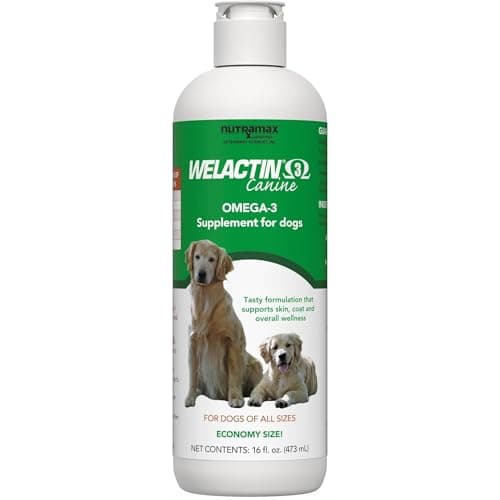
Nutramax
Welactin Canine Omega-3 Liquid
Our score
$22–$58
Best for
Households where a fish-oil-enriched therapeutic diet is closed off — multi-dog kitchens, elimination or kidney diets, dogs who refuse the food — and owners who want a dose they can compute and score against
The omega-3 we recommend when a fish-oil-enriched therapeutic diet is not an option, on one honest basis: the omega-3 trials in arthritic dogs were run on a diet, not on this bottle, none of them separated from control on a force plate, and the two placebo-controlled bottle trials disagree — so a dosed liquid with a published guaranteed analysis is the honest hardware for pursuing the same mechanism at a dose you and your vet chose, not a proven duplicate of anything (corrected 14 September 2026; we previously called the diet trial "the strongest evidence" and compared it as a head-to-head). Welactin earns the slot on concentration per dollar and on being made by Nutramax — not on the "#1 vet recommended" line, which is the brand's claim, not ours — and whose footnote, read 19 August 2026, defines its universe as vets "who recommended omega-3 supplements." Score lowered 8.6 to 8.4 on 19 August 2026, not because the oil changed but because a fine-print pass found the printed chart delivers under half the EPA+DHA that Colorado State's canine osteoarthritis chart calls for, that Nutramax prints the joint dose on its Advanced product and not on this one, that a retailer and the maker publish different guaranteed analyses for the same bottle, and that no calorie figure exists on any surface. It remains a cheap, concentrated, well-made oil. It is not a product you can dose for arthritis by reading its own label.
Pros
- High concentration: 1,330 mg combined EPA+DHA per 6 mL scoop on the manufacturer's guaranteed analysis
- Liquid over food scales to any body weight — no chew-splitting arithmetic
- Manufactured by Nutramax, the same company as Cosequin and Dasuquin
- Runs about $0.58/day for a 60 lb dog at the verified Amazon price — cheap for the category
Cons
- Smells fishy, and a bowl-refuser can start refusing dosed food
- Dosing hardware changed: current bottles pour by measuring scoop, not the pump our older copy described — dose accuracy now depends on you levelling a scoop
- A 6 mL scoop is coarse for small dogs — the label drops to half-scoop every-other-day under 10 lb
- Amazon's listing now leads with "Skin & Coat," not joints — the joint claim is the softer half of the marketing
- The printed chart is a skin-and-coat dose, not a joint dose, and Nutramax says so without giving a number: welactin.com's administration note read "Veterinarians may recommend increased amounts for enhanced joint health support" on 19 August 2026, and by 25 August 2026 had been reworded to "Your veterinarian may recommend to increase this amount for maximum joint health benefits" — the wording moved, the missing number stayed missing. At the chart's 1½ scoops, a 75 lb dog gets 1,995 mg of EPA+DHA against the 4,374 mg Colorado State's published canine osteoarthritis chart calls for at that weight — about 46%. Nutramax's own Welactin Advanced 3TA prints a separate "Joint Health" column at exactly double its broad-spectrum dose; this product prints one column and a footnote
- Retailer panels and the maker's panel disagree. On 19 August 2026 welactin.com published 1,610 mg total omega-3 and 1,330 mg EPA+DHA per 6 mL scoop, while a veterinary supply retailer's page for the same 16 oz bottle published 1,770 mg total, 870 mg EPA and 570 mg DHA (1,440 mg EPA+DHA) per the same 6 mL scoop. We use the maker's figures. If you are computing a dose against a study, read the panel on the bottle in your hand
- No calorie figure is published anywhere we could find — not on welactin.com and not on the Amazon listing, verified absent 19 August 2026. Fish oil is the most calorie-dense thing you can add to a bowl, and weight is the largest modifiable factor in canine osteoarthritis, so this is the number the category should print and does not
- Fish, obviously — which disqualifies it for any dog on a fish-based novel protein elimination diet, and doubles up on any dog already eating a fish-based food
- No use-within-after-opening period, no refrigeration instruction and no full ingredient list are published on the maker's product page, verified absent 9 September 2026. A 16 oz bottle lasts a 20–44 lb dog about 11 weeks and a 10–19 lb dog about 22 weeks, and fish oil oxidises once opened, so the buyer of the small dog is being sold five months of exposure with no stated shelf life. Follow whatever the bottle in your hand says; the website does not say
Glucosamine and chondroitin second, and the eyes have to be properly open. This is where the honest reading has moved. In a blinded, placebo-controlled trial of 75 dogs with hip osteoarthritis, the glucosamine/chondroitin arm did not separate from placebo on peak vertical force at four weeks, while green-lipped-mussel lipid extracts and carprofen both did.[20] In a separate 60-dog placebo-controlled trial using continuous activity monitors, there was no difference in activity counts either — while owner-rated pain scores improved equally in both arms, which is what a caregiver placebo effect looks like.[21]
Two fair defences, which we would rather raise ourselves. Both trials ran roughly 15 to 30 dogs per arm and neither was powered to exclude a small benefit, and the six-week trial used a maintenance dose throughout rather than the manufacturer's loading dose. It is safe and it is inexpensive. But the version of this paragraph that said the evidence is "genuinely mixed" was too kind: the two best-designed trials found nothing, and the thing we are most confident about in this category is a negative result. Give it six weeks, judge it against something you can count — stairs taken, minutes walked — and drop it if you see nothing.

Nutramax
Cosequin Plus MSM & HA Joint Health Supplement (Chewable Tablets)
Our score
$25–$63
Best for
First-line joint supplementation for dogs of any size
If you're going to put a dog on one supplement, this is still the one we'd start with: the FCHG49/TRH122 forms are the ones that have actually been put in trials rather than assumed into them, and the DS tablet delivers them at full strength for well under a dollar a day even in a large dog. Two honesty notes. The evidence for the whole category is modest and the caregiver placebo effect is not — so start it, give it six weeks, and judge it against something you measured before you began. And the listing's "#1 vet recommended brand" line is a marketing survey claim, not a clinical one; buy on the ingredient forms and the price per tablet, which you can verify.
Pros
- Contains FCHG49 glucosamine and TRH122 chondroitin — the specific patented forms that have actually been put in trials, rather than generic glucosamine. Corrected 31 August 2026: this line previously said "the patented forms used in published canine studies," which reads as support the record does not give. The positive placebo-controlled trial of these forms was in human knees (Das and Hammad 2000); the one blinded, placebo-controlled canine force-plate trial to test them — inside Dasuquin with MSM — found no significant advantage over placebo (Kampa 2023)
- The linked tablet adds 6 mg sodium hyaluronate (HA) per tablet over the classic Plus MSM formula. Corrected 19 August 2026: this line previously said it also added 3 mg of manganese. It does not — the classic Plus MSM tablet carries the same 3 mg of manganese ascorbate, re-verified on cosequin.com that day. HA is the only difference
- Maximum-strength (DS) dosing — 600 mg glucosamine per tablet
- Chewable tablet, palatable for most dogs
- Wide count range across the tablet line (60 to 250), so per-tablet price drops meaningfully if you buy the larger bottles
Cons
- Tablets are large; some small dogs need them split
- Slow onset — give it 4–6 weeks to evaluate effect
- A big dog eats through a small bottle fast: over 60 lb, the loading dose is 3 tablets a day, so the linked 75-count is 25 days of loading
- The linked 75-count with-HA variant costs more per tablet (~$0.33) than the plain-MSM 132-count (~$0.26) — the HA is 6 mg, and whether that is worth the premium is genuinely unclear
- Supplement effects in this category are small enough that the measured 39.7% caregiver placebo rate can swamp them — judge it against a measurement, not an impression
- Not vegan-friendly (chondroitin is animal-derived)
- Nutramax publishes no inactive-ingredient list on either tablet line's own product page (verified absent again on cosequin.com 31 August 2026). We previously printed the base here as brewers dried yeast, dextrose and natural & artificial flavors, sourced to retailer label reproductions; on 31 August 2026 we could not re-reach any retailer carrying that list (Chewy 429, Petco 403, Drugs.com 403), so treat it as unverified. The checkable finding stands and is the one that matters: the base is not published, and a base you cannot read cannot be cleared for a dog on a strict elimination diet
Whether stepping up to Dasuquin is worth it is covered in our Dasuquin vs Cosequin comparison, and matching dose to a Lab-sized body is in the dosing-by-weight guide. And before either: a 6.1% weight loss produced a significant reduction in lameness in obese arthritic dogs, which is more than any supplement on this page has shown.[22]

What gear helps a greying Lab?#
Two purchases move the needle most at home, and the free version comes first: rubber-backed runners on the three or four routes your dog actually walks solve most of the traction problem for a fraction of what gear costs.

Big Barker
Big Barker 7-inch Pillow Top
Our score
$250–$460
Best for
Large and giant breeds with hip, elbow, or arthritis pain
The bed every senior-large-breed owner eventually buys, and the one we still recommend first for a dog over about 80 lb — because seven inches of foam is the only thing that reliably keeps a heavy dog's hip off the floor plane overnight. (It is not one solid slab, as we used to say: the maker's own copy describes a 3-layer build, a 2" base under a 3" support layer under a 2" comfort top.) It is also the only bed in the category with a clinical study attached, and we would rather you knew what that study is: forty dogs, no control group, no blinding, and outcomes scored by the owners who had just been given a free bed. That is a reason to be interested, not a reason to be convinced. Buy on the foam depth and the ten-year warranty, which are facts. On where to buy: the price is the same either way, so buy direct for the 180-night sleep trial, which Amazon's return window does not match. The two editions both sell on both channels at identical prices, re-verified 6 September 2026 — flat Large $249.95, Headrest Large $289.95. We have published two wrong things about this in the past, a $40 Amazon markup and a direct-only cheap edition; both are retired, and the honest version is that the channel decides your trial, not your price.
Pros
- Seven inches of foam — a 3-layer build (2" base, 3" support, 2" top comfort) deep enough that a 100 lb dog's hip does not reach the floor plane, which is the whole job
- 10-year warranty — foam must retain at least 90% of its original shape and support, or it is replaced
- The only bed in the category with a published clinical study behind it, even though that study is a single-arm pilot
- Made in the USA
- Microfiber cover unzips and machine-washes
Cons
- Premium price
- Editions, not channels, are what the price difference is. Both are on Amazon and both are on bigbarker.com at identical prices, re-verified 2026-09-06: the flat headrest-free Large is $249.95 (B0GRBXBPXH) and the Headrest Large is $289.95 (B0GRBX5TBL), both In Stock with the buy box held by Big Barker itself, both matching the maker's own site. We previously misread this as a $40 Amazon markup, and then as the cheap edition being direct-only. Both claims are retired
- Bulky — measure your space, not just your dog
- Cover-only style isn't bolstered (consider Sofa edition for nesters)
- The clinical study everyone cites is open-label, single-arm, and owner-scored, with no control group
A 33 kg Labrador with sore elbows lies on the points of those elbows for a large part of the day, and a hard floor loads them directly.[6] We have seen no published figure for how many hours a day an arthritic dog lies down, so we are not giving you one — the argument for the bed is the pressure, not a statistic. And if the bed you own still springs back under a knuckle pressed at the hip and elbow spots, you do not need a new one yet. The full field, including budget options, is in our orthopedic bed roundup.

Pet Gear
Pet Gear Tri-Fold Pet Ramp
Our score
$85–$120
Best for
Hesitant and refusing dogs, indoor steps, couches, and cars up to about a 30-inch sill
The ramp we reach for first when a dog has already refused one. The extra width and the raised side edges do more for acceptance than any other feature at this price, and the carpet tread solves the surface problem that stops most dogs before height is ever the issue. It is heavier than its "portable" billing suggests, and the 200 lb ceiling rules it out for giant breeds. Buy it for the hesitant dog, not for the hiking-and-rain dog. Two corrections we owe you before you click: the warranty is 30 days, not the year this page used to print, and Pet Gear now sells the same 71-inch frame with a removable washable supertraX mat instead of fixed carpet — if your dog goes out in the wet, pay the extra sixteen dollars for it.
Pros
- 19.5 inches wide — roughly 3.5 inches wider than most ramps in this price band, which is the difference between a stiff dog placing four feet confidently and refusing
- Raised edges along both sides give a dog a boundary he can feel without looking down
- Carpet-textured skid-resistant tread, so a nail-scraping dog will walk it without you having to cover it with a towel
- 71 inches long — a 25-degree incline to a 30-inch SUV floor, within an inch of what a fully extended telescoping ramp achieves
- Safety tether and rubber base grippers included; attached carry handle
- Rated to 200 lb
Cons
- The warranty is 30 days, not a year — Pet Gear's own listing field reads "30 day non-transferrable limited warranty" on every 71-inch variant we checked on 11 August 2026. We had published a 1-year warranty since this page was created and it was wrong
- Heavy — 25.2 lb on Amazon's own figure for the reflective 71-inch sibling and 27 lb for the supertraX version. The 15 lb figure floating around the range belongs to the 16-inch-wide Travel Lite, a different ramp. Two-hand carry
- Carpet absorbs water and stays damp — not the ramp for a dog who goes out in the rain daily. The newer supertraX variant has a removable washable mat and solves this for about $16 more
- 200 lb rating is a real ceiling for giant breeds, and for anyone who wants to walk up alongside their dog
- Fixed 71-inch length: there is no shortening it for a 16-inch couch, so it is a large object to store and to swing around a hallway
- The Titanium variant (9300TI) that this page linked until 29 August 2026 read "Only 4 left in stock (more on the way)" on five consecutive checks a month apart (30 July, 11, 15, 23 and 29 August) — a standing availability problem, not a blip — so our link now goes to the reflective sibling (AM9300RF), the same 71 × 19.5 × 4 inch frame, 200 lb rating and 30-day warranty, which was cleanly in stock at $89.50 on 29 August 2026, $4.70 cheaper than the Titanium that day
The ramp targets the two repeated impacts in a pet Lab's routine that you can actually delete: the couch dismount and the car tailgate. That is a reasoning argument rather than a tested one — no trial has shown a ramp changes joint outcomes — but a Labrador landing front-first from a tailgate is putting the impact through the joint this breed is six times more likely to have disease in.[3][4] This tri-fold handles Lab weight with margin; for taller vehicles, our ramp guide covers telescoping options.
The bottom line#
The order of operations for a stiff Labrador: weight first, and honestly — run the rib check today and act on what you feel, remembering that a quarter of owners score their dog leaner than the vet does. Movement second, consistent and low-impact, with the fetch habit rationed. Omega-3 third, understanding that what was trialled was a food. Glucosamine fourth and optional, understanding that the two best-designed trials found nothing. Gear where it counts: traction, bed, ramp. Prescription pain control through your vet when the dog needs it, never from your own shelf.
One last number, because it is the reason this page exists. Among 147 Labradors in UK primary care whose cause of death was recorded, musculoskeletal disorder was the most common at 24.5%, ahead of neoplasia at 21.1%, with median longevity 12.0 years.[6] In this breed the legs are the most common recorded reason the life ends. Not a tumour. The legs — and the single best-evidenced thing you can do about that is free, and it starts at the bowl.
Sources#
- Pegram C, Woolley C, Brodbelt DC, Church DB, O'Neill DG. "Disorder predispositions and protections of Labrador Retrievers in the UK." Scientific Reports. 2021;11:13988. doi:10.1038/s41598-021-93379-2 — 1,462 Labradors against 20,786 non-Labradors, 2016 VetCompass data; increased odds for 12 of 35 disorders, with osteoarthritis the highest at OR 2.83 (95% CI 2.21–3.62); reduced odds for 7 of 35, lowest patellar luxation OR 0.18.
- Engdahl K, Malm Persson S, Andersson L, Ringmark S, Bjørnvad CR, Hedhammar Å, Höglund K. "Prevalence of hip and elbow dysplasia in young adult dogs in Sweden." Veterinary Record. 2026;198(12):e560-e573. doi:10.1002/vetr.70224 — Swedish Kennel Club screening 2007–2016, dogs 12–24 months. Labrador hips: 13,125 screened — A 62.7%, B 21.1%, C 11.3%, D–E 4.8%, C–E 16.2%. Labrador elbows: 13,057 screened — ED 0 91.0%, ED 1 5.4%, ED 2 2.0%, ED 3 1.5%, ED 1–3 9.0%. Authors note severe cases may be under-represented because affected young dogs may never be screened.
- O'Neill DG, Brodbelt DC, Hodge R, Church DB, Meeson RL. "Epidemiology and clinical management of elbow joint disease in dogs under primary veterinary care in the UK." Canine Medicine and Genetics. 2020;7:1. doi:10.1186/s40575-020-0080-5 — 455,069 dogs; one-year period prevalence of elbow joint disease 0.56% (95% CI 0.53–0.60); Labrador Retriever final multivariable OR 5.94 (95% CI 4.65–7.60); of 616 incident cases, osteoarthritis 76.0% and elbow dysplasia 30.8%; of 109 deaths by euthanasia with information available, elbow joint disease contributed to the decision in 41.3%.
- Humphries A, Shaheen AF, Gómez Álvarez CB. "Biomechanical comparison of standing posture and during trot between German shepherd and Labrador retriever dogs." PLoS ONE. 2020;15(10):e0239832. doi:10.1371/journal.pone.0239832 — 12 Labradors and 12 German Shepherds on a pressure walkway and motion capture; standing, Labradors carried 69% ± 5% of body weight on the forelimbs against 62% ± 2% in German Shepherds (p < 0.001), with the centre of pressure located more cranially.
- Raffan E, Dennis RJ, O'Donovan CJ, et al. "A Deletion in the Canine POMC Gene Is Associated with Weight and Appetite in Obesity-Prone Labrador Retriever Dogs." Cell Metabolism. 2016;23(5):893-900. doi:10.1016/j.cmet.2016.04.012 — 14 bp deletion in POMC disrupting the β-MSH and β-endorphin coding sequences, allele frequency 12%; associated with body weight (per-allele effect 0.33 SD), adiposity and greater food motivation; among other breeds found only in the flat-coated retriever; significantly more common in Labradors selected to become assistance dogs than pets.
- McGreevy PD, Wilson BJ, Mansfield CS, Brodbelt DC, Church DB, Dhand N, Soares Magalhães RJ, O'Neill DG. "Labrador retrievers under primary veterinary care in the UK: demography, mortality and disorders." Canine Genetics and Epidemiology. 2018;5:8. doi:10.1186/s40575-018-0064-x — 33,320 Labradors, disorder data from a random sample of 2,074; most prevalent recorded disorders otitis externa 10.4%, overweight/obesity 8.8% (95% CI 7.6–10.1), degenerative joint disease 5.5%; mean adult bodyweight 33.0 kg; median longevity 12.0 years; of 147 deaths with a recorded cause, musculoskeletal disorder 36 (24.5%) and neoplasia 31 (21.1%), with median age at death from musculoskeletal disorder 13.4 years.
- German AJ, Hervera M, Hunter L, Holden SL, Morris PJ, Biourge V, Trayhurn P. "Improvement in insulin resistance and reduction in plasma inflammatory adipokines after weight loss in obese dogs." Domestic Animal Endocrinology. 2009;37(4):214-226. doi:10.1016/j.domaniend.2009.07.001 — 26 overweight dogs of various breeds through a diet-and-exercise weight-loss programme; body fat mass positively correlated with plasma insulin and insulin:glucose ratio, both of which fell after weight loss; notable decreases in plasma TNF-alpha, haptoglobin and C-reactive protein, indicating improvement of a subclinical inflammatory state.
- Kealy RD, Lawler DF, Ballam JM, Mantz SL, Biery DN, Greeley EH, Lust G, Segre M, Smith GK, Stowe HD. "Effects of diet restriction on life span and age-related changes in dogs." Journal of the American Veterinary Medical Association. 2002;220(9):1315-1320. doi:10.2460/javma.2002.220.1315 — 48 Labrador Retrievers paired, one of each pair fed 25% less food than its pair-mate from 8 weeks of age until death; food-restricted dogs weighed less with lower body fat and lower serum triglycerides, triiodothyronine, insulin and glucose; median life span significantly longer and onset of chronic disease generally delayed in the restricted group.
- Lawler DF, Larson BT, Ballam JM, Smith GK, Biery DN, Evans RH, Greeley EH, Segre M, Stowe HD, Kealy RD. "Diet restriction and ageing in the dog: major observations over two decades." British Journal of Nutrition. 2008;99(4):793-805. doi:10.1017/s0007114507871686 — indexed as a randomised controlled trial; "Major lifetime observations included 1.8 years longer median lifespan among diet-restricted dogs, with delayed onset of late life diseases, especially osteoarthritis"; long-term restriction did not negatively affect skeletal maturation, structure or metabolism; restricted dogs required 17% less energy to maintain each lean kilogram.
- Huck JL, Biery DN, Lawler DF, Gregor TP, Runge JJ, Evans RH, Kealy RD, Smith GK. "A longitudinal study of the influence of lifetime food restriction on development of osteoarthritis in the canine elbow." Veterinary Surgery. 2009;38(2):192-198. doi:10.1111/j.1532-950x.2008.00487.x — same 48-dog cohort; no statistical difference in radiographic elbow osteoarthritis frequency between feeding groups at any time point, no difference in histopathologic prevalence or severity, no difference in gross lesions; severity greater in control-fed dogs at 6 years only; fragmented medial coronoid process, ununited anconeal process and osteochondrosis were absent from every elbow. States "Diet restriction resulted in a 1.8-year extension in median lifespan."
- Smith GK, Paster ER, Powers MY, Lawler DF, Biery DN, Shofer FS, McKelvie PJ, Kealy RD. "Lifelong diet restriction and radiographic evidence of osteoarthritis of the hip joint in dogs." Journal of the American Veterinary Medical Association. 2006;229(5):690-693. doi:10.2460/javma.229.5.690 — prevalence of radiographic hip osteoarthritis across the cohort rose linearly from 15% at 2 years to 67% by 14 years; median age at first radiographic evidence 6 years in the control-fed group against 12 years in the restricted-fed group; radiographs scored by a board-certified radiologist unaware of group assignment.
- Salt C, Morris PJ, Wilson D, Lund EM, German AJ. "Association between life span and body condition in neutered client-owned dogs." Journal of Veterinary Internal Medicine. 2019;33(1):89-99. doi:10.1111/jvim.15367 — 50,787 middle-aged neutered dogs across around 900 North American hospitals, including 11,867 Labradors; hazard ratio for death in overweight versus normal body condition, Labrador Retriever 1.83 (99.79% CI 1.54–2.17); overweight condition was associated with shorter life in all twelve breeds studied.
- Blanchard T, Hoummady S, Banuls D, et al. "The Perception of the Body Condition of Cats and Dogs by French Pet Owners and the Factors Influencing Underestimation." Animals (Basel). 2023;13(23):3646. doi:10.3390/ani13233646 — 304 dogs and 270 cats at vaccination consultations; owner assessments compared against the nine-point body condition score assigned by veterinary personnel; 27% of dog owners underestimated their pet's body condition, and underestimation was associated with the pet actually being overweight.
- O'Neill DG, Khoo JSP, Brodbelt DC, Church DB, Pegram C, Geddes RF. "Frequency, breed predispositions and other demographic risk factors for diagnosis of hypothyroidism in dogs under primary veterinary care in the UK." Canine Medicine and Genetics. 2022;9(1):11. doi:10.1186/s40575-022-00123-8 — 905,553 dogs, 2,105 recorded with hypothyroidism in 2016; annual prevalence 0.23% (95% CI 0.22–0.24); 24 predisposed and nine protected breeds identified; Labrador Retriever multivariable OR 1.40 (95% CI 1.16–1.68, p < 0.001), against Standard Doberman Pinscher 17.02 and Tibetan Terrier 11.25 at the top; median age at first diagnosis 7.65 years.
- Travail V, Fernandez Sanchez C, Costo JM, et al. "Assessment of the likelihood of hypothyroidism in dogs diagnosed with and treated for hypothyroidism at primary care practices: 102 cases (2016-2021)." Journal of Veterinary Internal Medicine. 2024;38(2):931-941. doi:10.1111/jvim.16993 — 102 dogs already receiving levothyroxine in first-opinion practice, reviewed independently by three ECVIM-CA diplomates; each judged levothyroxine supplementation not indicated in 58.8%, 52.9% and 45.1% of cases respectively; authors conclude hypothyroidism may be over-diagnosed and that thyroid testing should be reserved for dogs with a high pre-test probability.
- Witsberger TH, Villamil JA, Schultz LG, Hahn AW, Cook JL. "Prevalence of and risk factors for hip dysplasia and cranial cruciate ligament deficiency in dogs." Journal of the American Veterinary Medical Association. 2008;232(12):1818-1824. doi:10.2460/javma.232.12.1818 — 1,243,681 dogs reported to the Veterinary Medical Database 1964–2003; castrated males OR 1.21 for hip dysplasia, castrated males OR 1.68 and spayed females OR 2.35 for cruciate deficiency; dogs over 4 years more likely to have cruciate deficiency; large and giant breeds more likely to have either. Breed-specific figures sit in full text we could not obtain, so no Labrador-specific cruciate figure is quoted on this page.
- Roush JK, Dodd CE, Fritsch DA, Allen TA, Jewell DE, Schoenherr WD, Richardson DC, Leventhal PS, Hahn KA. "Multicenter veterinary practice assessment of the effects of omega-3 fatty acids on osteoarthritis in dogs." Journal of the American Veterinary Medical Association. 2010;236(1):59-66. doi:10.2460/javma.236.1.59 — randomised, double-blinded, controlled clinical trial; 127 client-owned dogs with osteoarthritis at 18 privately owned clinics fed for 6 months on a test food with a 31-fold increase in total omega-3 content; owners reported significantly improved ability to rise and to play at 6 weeks and to walk at 12 and 24 weeks. The intervention was a food, and several authors were employed by the food manufacturer.
- Roush JK, Cross AR, Renberg WC, Dodd CE, Sixby KA, Fritsch DA, Allen TA, Jewell DE, Richardson DC, Leventhal PS, Hahn KA. "Evaluation of the effects of dietary supplementation with fish oil omega-3 fatty acids on weight bearing in dogs with osteoarthritis." Journal of the American Veterinary Medical Association. 2010;236(1):67-73. doi:10.2460/javma.236.1.67 — randomised, double-blinded, controlled clinical trial; 38 dogs at 2 university clinics, test food containing 3.5% fish oil omega-3 fatty acids; change in mean peak vertical force from day 0 to day 90 was 5.6% in the test group against 0.4% in controls; improvement in peak vertical force seen in 82% of test dogs against 38% of controls.
- Fritsch DA, Allen TA, Dodd CE, Jewell DE, Sixby KA, Leventhal PS, Brejda J, Hahn KA. "A multicenter study of the effect of dietary supplementation with fish oil omega-3 fatty acids on carprofen dosage in dogs with osteoarthritis." Journal of the American Veterinary Medical Association. 2010;236(5):535-539. doi:10.2460/javma.236.5.535 — randomised, controlled, multisite trial; 131 dogs at 33 hospitals standardised to approximately 4.4 mg/kg/day carprofen, then randomised to a fish-oil-supplemented food or a low-omega-3 control food; carprofen dosage decreased significantly faster in the supplemented group over 12 weeks.
- Kampa N, Kaenkangploo D, Jitpean S, Srithunyarat T, Seesupa S, Hoisang S, Yongvanit K, Kamlangchai P, Tuchpramuk P, Lascelles BDX. "Study of the effectiveness of glucosamine and chondroitin sulfate, marine based fatty acid compounds (PCSO-524 and EAB-277), and carprofen for the treatment of dogs with hip osteoarthritis." Frontiers in Veterinary Science. 2023;10:1033188. doi:10.3389/fvets.2023.1033188 — prospective, block-randomised, double-blinded, placebo-controlled trial; 75 pet dogs with hip osteoarthritis in five arms of 15. At 4 weeks, change in peak vertical force was significant and greater than placebo for PCSO-524, EAB-277 and carprofen but not for glucosamine/chondroitin (−0.05 ± 6.34 against placebo 0.08 ± 1.90); at 6 weeks the glucosamine group's change (1.08 ± 5.49) lay between placebo and the other treatments. Subjective orthopaedic assessment scores did not change significantly in any group, including carprofen. Funded by Pharmalink International Ltd, which owns the EAB-277 and Antinol trademarks.
- Scott RM, Evans R, Conzemius MG. "Efficacy of an oral nutraceutical for the treatment of canine osteoarthritis. A double-blind, randomized, placebo-controlled prospective clinical trial." Veterinary and Comparative Orthopaedics and Traumatology. 2017;30(5):318-323. doi:10.3415/vcot-17-02-0020 — 30 dogs on a glucosamine/chondroitin nutraceutical against 30 on placebo, wearing activity monitors continuously across a 97-day study; no difference between groups in daily activity counts; owner-assessed pain interference and pain severity improved over 90 days in both groups with no difference between them, which the authors attribute to a caregiver placebo effect.
- Marshall WG, Hazewinkel HA, Mullen D, De Meyer G, Baert K, Carmichael S. "The effect of weight loss on lameness in obese dogs with osteoarthritis." Veterinary Research Communications. 2010;34(3):241-253. doi:10.1007/s11259-010-9348-7 — 14 obese client-owned dogs with clinical and radiographic osteoarthritis on a restricted-calorie diet over 16 weeks; significant decrease in lameness from a weight loss of 6.10% onwards, supported by kinetic gait analysis from 8.85% onwards. Open prospective trial, no control group.
This article is educational and does not replace veterinary advice. Diagnosis, pain medication and any large weight-reduction plan belong with your own vet, who can weigh your dog, score body condition properly and rule out the other things that make a middle-aged Labrador slow down.
Frequently asked
- At what age do Labradors start getting arthritis?
- There is no fixed age. In the lifetime colony study of 48 Labradors, the median age at first radiographic evidence of hip osteoarthritis was 6 years in the normally fed dogs and 12 in their diet-restricted littermates — and across the whole cohort, radiographic hip osteoarthritis rose from 15% at 2 years to 67% by 14. Most owners start noticing signs — slower rising, stiffness after rest, reluctance on stairs — from middle age onward. The age to start caring about it is earlier than the age it appears.
- How can I tell if my Labrador is overweight?
- Use three checks. Ribs: stroking the ribcage with flat hands and light pressure, you should feel individual ribs easily — if you have to press, there is too much padding. Waist: from above, the body should visibly narrow behind the ribs. Tummy: from the side, the belly should rise toward the hips, not sag or run level. Assume you are being generous: in a study of 304 dogs, 27% of owners scored their dog leaner than the veterinary assessor did, and underestimation was more likely in the dogs that were actually overweight. Fail any check and it is worth a weigh-in and a feeding plan at your next vet visit.
- Did a study really show feeding less delays arthritis?
- Yes, and the honest number is 1.8 years of median lifespan, not the two years usually quoted. Forty-eight Labrador littermates were paired, and from 8 weeks of age until death one of each pair was fed 25% less of the same food. The restricted dogs lived a median 1.8 years longer with delayed onset of late-life disease, especially osteoarthritis. Two conditions most retellings drop: the restriction ran lifelong from puppyhood, so it is not the same intervention as slimming an eight-year-old, and in the same cohort it made no measurable difference to elbow arthritis at all.
- What is the best joint supplement for a Labrador?
- Start with omega-3, and know exactly what was tested. Three randomised controlled trials in 127, 38 and 131 dogs found improvement in owner-rated mobility, a 5.6% gain in peak vertical force on a force plate, and a faster reduction in carprofen dose — but all three tested a therapeutic pet food rich in fish oil, not a pump-bottle supplement, and all three were run with the food manufacturer. Glucosamine and chondroitin are the weaker tier: in two blinded placebo-controlled trials they did not separate from placebo on either a force plate or activity monitors. No supplement substitutes for lean body weight.
- Can I give my Labrador ibuprofen for joint pain?
- No. Ibuprofen, naproxen, and acetaminophen are toxic to dogs — even one or two doses can cause stomach ulcers, kidney injury, or liver damage. If your Lab has already swallowed any, call your vet or an animal poison control line right away. Dogs get effective, safe pain relief through veterinary prescriptions: canine-specific NSAIDs and newer options designed and dosed for dogs. A painful day means a vet call, not the medicine cabinet.
- Is swimming good for a Labrador with arthritis?
- It is close to ideal. Water supports the dog's weight, so swimming builds and keeps the muscle that stabilizes arthritic joints with almost no impact — and most Labs take to it naturally. Keep sessions moderate, use a gradual entry or ramp rather than repeated leaping from banks and pool edges, and dry the ears afterward. In cold months, ask your vet about rehab facilities with heated underwater treadmills.