Buying Guide
Cheaper Alternatives to Cosequin and Dasuquin That Aren't Junk
There is no true generic Cosequin — but good Cosequin alternatives exist. How to match the actives, price them per gram, spot underdosed blends, and when the smarter budget move is fish oil.

There is no true generic Cosequin — the glucosamine and chondroitin forms in the Nutramax products are patented. But if the vet-line price is the obstacle, you have two honest options: buy a chew whose actives you can actually verify against the label math, or spend the same money on fish oil, which has better evidence behind it than any glucosamine product at any price. Two things this guide will tell you that a listicle will not. At verified August 2026 prices the "budget" chews are no longer the cheap end of this aisle — several cost more per year than Dasuquin. And the cheapest credible product here is one we do not sell and earn nothing from, which is why it leads the picks below.
Affiliate disclosure: Dog Orthopedic is reader-supported. When you buy through links on our site we earn a commission at no extra cost to you — about 3% on most pet products, and the same rate on every product we compare, so no pick earns us more than another. Prescription medication earns us nothing, and seeing your vet earns us nothing; we recommend both anyway. Learn more.
Imagery: Lifestyle photographs on this site are licensed from Pexels (royalty-free) and credited per image. Pexels imagery illustrates conditions and contexts — it does not depict the specific dogs or test sessions described in the text. Product photographs come from Amazon's Creators API. Breed portraits are illustrations of typical breed type rather than photographs of individual dogs, and are not drawn to scale against one another.
Why there is no true generic Cosequin#
Cosequin's actives are branded molecules: FCHG49 glucosamine hydrochloride and TRH122 sodium chondroitin sulfate. A tub of generic glucosamine contains the same ingredient class without that specification, so it is making a related claim, not the same claim. Dasuquin adds patented ASU on top — the full breakdown is in our Dasuquin vs Cosequin comparison.
But do not let anyone sell you the branded forms as the proven ones. The usual argument is that the trials were run on FCHG49 and TRH122, so the trial record does not transfer to generics. In the best-designed trial in this category, the glucosamine arm was Dasuquin with MSM, named in the paper, containing exactly those patented forms — and it was the arm that did not separate from placebo on a force plate, while a green-lipped mussel lipid extract and carprofen both did.[3] So the branded forms have a specification a generic lacks. What they do not have is a demonstrated advantage in outcome.
That does not make budget products worthless, and it does not make the vet lines a con. It reframes the question. You are not choosing between a proven product and an unproven one — you are choosing between products that are all unproven, at very different prices, with very different amounts of disclosure. Your job as a buyer is to stop comparing marketing and start comparing milligrams and dollars per day.
The "match the actives" method#
One skill replaces every listicle: compute what you are paying per gram of active ingredients. Four steps.
- Read the per-chew actives. The label must state milligrams of glucosamine, chondroitin, and MSM per chew — not per "blend."
- Multiply by your dog's daily serving. Use the label band for your dog's weight.
- Divide tub price by days of supply. That is your true cost per day.
- Divide cost per day by grams of actives per day. That is the comparison number.
Worked example — Cosequin chewable tablets with MSM, 55 lb dog. Each tablet carries 600 mg glucosamine HCl + 300 mg chondroitin sulfate + 250 mg MSM = 1,150 mg of actives, and the manufacturer's own chart gives a 31–60 lb dog 2 tablets a day for the initial 4–6 weeks, then 1.[10] A 132-count bottle is $34.91, verified 14 August 2026 — $0.265 a tablet.[11]
- Cost per day at loading: 2 × $0.265 = $0.53
- Actives per day: 2 × 1,150 mg = 2.3 g
- Cost per gram of actives: 0.53 ÷ 2.3 = about $0.23/g
(An earlier version of this page ran that sum on a "$45, 120-count" bottle and got $0.33/g. Both the count and the price were wrong. The verified figure is cheaper, which makes the vet-line comparison harder for budget chews to beat, not easier.)
Now a real budget tub. Zesty Paws at $32.97 for 90 chews, at 2 chews a day, is $0.73 a day. And here the method hits a wall that is itself the lesson: you cannot finish the calculation, because the actives sit inside a single 1,510 mg proprietary blend with no individual amounts published.[8] Take the whole blend as if it were all active — the most generous possible reading — and 2 chews is 1.51 g for $0.73, about $0.48 a gram. That is double the vet-line tablet, on an assumption that flatters the budget product as far as it can possibly be flattered. This is why the tub price alone tells you nothing.
How labels hide underdosing#
- Proprietary blends. "Hip & Joint Blend: 900 mg" with the individual amounts undisclosed. Assume the expensive ingredients are the smallest share.
- Serving-size inflation. The bold number is per 2 or 3 chews; the price math quietly triples.
- Ingredient shotgun. Twelve trendy line items — turmeric, collagen, hemp, yucca — each at a dose too small to plausibly matter. Breadth reads well; depth works.
- Salt-form sleight of hand. Glucosamine comes as hydrochloride or as sulfate, and a milligram of one is not a milligram of the other — the salt fraction differs, so the HCl form delivers more glucosamine per stated milligram. Note which form the label uses and compare like with like when you run the math.
- The wrong comparison unit. "More glucosamine than the leading brand" per tub, not per day.
A floor worth respecting: the NASC (National Animal Supplement Council) Quality Seal, which requires an independent audit of a supplier's facilities and labelling. It is not proof of efficacy — nothing on any label in this aisle is — but it separates audited manufacturers from garage brands.
Use it as a floor rather than a ranking, though, because the seal does not sort this category the way price does. Checked against NASC's own supplier directory on 14 August 2026: Zesty Paws and VetriScience both hold the Quality Seal. Nutramax — the maker of Cosequin and Dasuquin — does not appear in the directory at all, under any of its brand names.[6] Membership is voluntary and plenty of serious manufacturers sit outside it, so this is not an argument against the vet lines. It is an argument against using the seal as your tiebreaker.
The four alternatives worth buying#
Nutramax
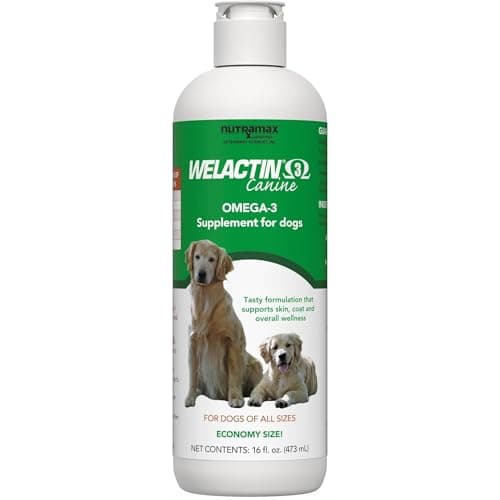
Welactin Canine Omega-3 Liquid

YuMOVE
YuMOVE Hip and Joint Supplement for Dogs

Zesty Paws
Zesty Paws Hip & Joint Bites (formerly Mobility Bites)

Pet Honesty
Pet Honesty Hip and Joint Health Chews
| Product | Score | Best for | Price | |
|---|---|---|---|---|
Nutramax Welactin Canine Omega-3 Liquid | 8.4 | Households where a fish-oil-enriched therapeutic diet is closed off — multi-dog kitchens, elimination or kidney diets, dogs who refuse the food — and owners who want a dose they can compute and score against | $22–$58 | View |
YuMOVE YuMOVE Hip and Joint Supplement for Dogs | 7.9 | UK-formula alternative for dogs that won't eat Cosequin chews | $25–$70 | View |
Zesty Paws Zesty Paws Hip & Joint Bites (formerly Mobility Bites) | 7.6 | Palatable everyday joint chew for young and early-stage dogs | $33–$70 | View |
Pet Honesty Pet Honesty Hip and Joint Health Chews | 7.4 | Daily maintenance chew when palatability is the deciding factor | $25–$55 | View |
The best-evidence budget move: add omega-3 instead#
Here is the quiet truth of this category: omega-3 fatty acids (EPA and DHA) have a stronger evidence base for canine osteoarthritis than glucosamine and chondroitin.
On the omega-3 side there is a randomised, double-blinded, controlled trial in 38 client-owned arthritic dogs, measuring weight-bearing on a force plate over 90 days, in which the fish-oil-enriched food improved weight-bearing and the control food did not.[1] On the glucosamine side, a review of the canine literature concluded that the evidence is limited and conflicting and that "there is a paucity of well-designed clinical veterinary studies investigating the true treatment effect,"[2] and a blinded, placebo-controlled force-plate trial found that glucosamine plus chondroitin did not separate from placebo while a green-lipped mussel lipid extract and an NSAID both did.[3]
So if you can only afford one bottle, a serious argument says it should be fish oil, not a glucosamine chew.
The honest asterisk, which most pages that make this argument leave out. The omega-3 trial tested a therapeutic diet, not a bottle of oil. The result belongs to the food. Nobody has run the equivalent trial on a pump-over-your-kibble fish oil, so buying a bottle is an extrapolation — a reasonable one, but an extrapolation.
#1 Pick
Nutramax
Welactin Canine Omega-3 Liquid
Our score
$22–$58
Best for
Households where a fish-oil-enriched therapeutic diet is closed off — multi-dog kitchens, elimination or kidney diets, dogs who refuse the food — and owners who want a dose they can compute and score against
The omega-3 we recommend when a fish-oil-enriched therapeutic diet is not an option, on one honest basis: the omega-3 trials in arthritic dogs were run on a diet, not on this bottle, none of them separated from control on a force plate, and the two placebo-controlled bottle trials disagree — so a dosed liquid with a published guaranteed analysis is the honest hardware for pursuing the same mechanism at a dose you and your vet chose, not a proven duplicate of anything (corrected 14 September 2026; we previously called the diet trial "the strongest evidence" and compared it as a head-to-head). Welactin earns the slot on concentration per dollar and on being made by Nutramax — not on the "#1 vet recommended" line, which is the brand's claim, not ours — and whose footnote, read 19 August 2026, defines its universe as vets "who recommended omega-3 supplements." Score lowered 8.6 to 8.4 on 19 August 2026, not because the oil changed but because a fine-print pass found the printed chart delivers under half the EPA+DHA that Colorado State's canine osteoarthritis chart calls for, that Nutramax prints the joint dose on its Advanced product and not on this one, that a retailer and the maker publish different guaranteed analyses for the same bottle, and that no calorie figure exists on any surface. It remains a cheap, concentrated, well-made oil. It is not a product you can dose for arthritis by reading its own label.
Pros
- High concentration: 1,330 mg combined EPA+DHA per 6 mL scoop on the manufacturer's guaranteed analysis
- Liquid over food scales to any body weight — no chew-splitting arithmetic
- Manufactured by Nutramax, the same company as Cosequin and Dasuquin
- Runs about $0.58/day for a 60 lb dog at the verified Amazon price — cheap for the category
Cons
- Smells fishy, and a bowl-refuser can start refusing dosed food
- Dosing hardware changed: current bottles pour by measuring scoop, not the pump our older copy described — dose accuracy now depends on you levelling a scoop
- A 6 mL scoop is coarse for small dogs — the label drops to half-scoop every-other-day under 10 lb
- Amazon's listing now leads with "Skin & Coat," not joints — the joint claim is the softer half of the marketing
- The printed chart is a skin-and-coat dose, not a joint dose, and Nutramax says so without giving a number: welactin.com's administration note read "Veterinarians may recommend increased amounts for enhanced joint health support" on 19 August 2026, and by 25 August 2026 had been reworded to "Your veterinarian may recommend to increase this amount for maximum joint health benefits" — the wording moved, the missing number stayed missing. At the chart's 1½ scoops, a 75 lb dog gets 1,995 mg of EPA+DHA against the 4,374 mg Colorado State's published canine osteoarthritis chart calls for at that weight — about 46%. Nutramax's own Welactin Advanced 3TA prints a separate "Joint Health" column at exactly double its broad-spectrum dose; this product prints one column and a footnote
- Retailer panels and the maker's panel disagree. On 19 August 2026 welactin.com published 1,610 mg total omega-3 and 1,330 mg EPA+DHA per 6 mL scoop, while a veterinary supply retailer's page for the same 16 oz bottle published 1,770 mg total, 870 mg EPA and 570 mg DHA (1,440 mg EPA+DHA) per the same 6 mL scoop. We use the maker's figures. If you are computing a dose against a study, read the panel on the bottle in your hand
- No calorie figure is published anywhere we could find — not on welactin.com and not on the Amazon listing, verified absent 19 August 2026. Fish oil is the most calorie-dense thing you can add to a bowl, and weight is the largest modifiable factor in canine osteoarthritis, so this is the number the category should print and does not
- Fish, obviously — which disqualifies it for any dog on a fish-based novel protein elimination diet, and doubles up on any dog already eating a fish-based food
- No use-within-after-opening period, no refrigeration instruction and no full ingredient list are published on the maker's product page, verified absent 9 September 2026. A 16 oz bottle lasts a 20–44 lb dog about 11 weeks and a 10–19 lb dog about 22 weeks, and fish oil oxidises once opened, so the buyer of the small dog is being sold five months of exposure with no stated shelf life. Follow whatever the bottle in your hand says; the website does not say
Welactin delivers 1,610 mg of total omega-3 and 1,330 mg of combined EPA+DHA per 6 mL scoop, dosed over food by a weight chart on the bottle — half a scoop every other day for a 5–9 lb dog, up through 1½ scoops at 45–79 lb, to 2½ scoops over 115 lb.[4] It comes from the same manufacturer as Cosequin and runs $22–$58 a bottle, which for a mid-size dog is well under a dollar a day. Too much fish oil shows up as soft stool.
One genuinely useful thing buried on Nutramax's own site, which nobody in this category mentions: its veterinary-exclusive concentrated version publishes two dosing columns — "Broad Spectrum" and "Joint Health" — and the joint-health column is exactly double.[4] The manufacturer is telling you, in a table, that joints need more omega-3 than skin and coat do. If you are buying fish oil for joints and dosing off a general chart, that is worth raising with your vet — and it is a vet conversation rather than something to do on your own, because fish oil affects platelet function and matters before surgery.
The different-mechanism alternative: YuMOVE#
#2 Pick
YuMOVE
YuMOVE Hip and Joint Supplement for Dogs
Our score
$25–$70
Best for
UK-formula alternative for dogs that won't eat Cosequin chews
The credible non-Nutramax option if you've tried Cosequin without improvement and want a different mechanism. Be clear-eyed about two things before paying for it. Green-lipped mussel's impressive trial results — matching an NSAID on a force plate in blinded studies — belong to concentrated lipid extracts, not to the whole-mussel powder in these chews. And the headline claim will not sit still: "clinically proven in 6 weeks" (Amazon bullet, still live) became "clinically proven to work in 4 weeks" on the maker's own page by 16 August 2026 — the same unnamed-UK-college footnote under both, so the claim shrank two weeks without gaining a citation. The manufacturer's own dosing pages still disagree with its Amazon listing by a factor of three — which decides whether this costs you $140 or $426 a year for a 70 lb dog (third check, 2026-08-16). Score lowered 8.4 → 7.9 on 2026-08-12 for the disclosure gaps, not because the product changed. Everything above re-verified 2026-08-16 against both dosing pages: the threefold contradiction still stands. Held at 7.9 rather than lowered further, because the same pass found two things in the product's favour we had not credited — a 90-day 100% satisfaction guarantee that covers Amazon and outlasts the label's own trial, and a NASC primary- supplier listing for its US distributor. It is the more expensive product with the weaker evidence and the better consumer protection.
Pros
- ActivEase Green Lipped Mussel — a different, anti-inflammatory pathway than glucosamine alone
- Soft chews most dogs take readily, by reviewer consensus
- The refund window outlasts the trial the label asks for — a 90-day 100% satisfaction guarantee from Vetnique Labs that explicitly covers authorized Amazon purchases (verified 2026-08-13). Dasuquin's maker gives you 10 business days, so you cannot finish its own loading phase and still return it. On this axis the pricier product is clearly the safer purchase.
- NASC lists Vetnique Labs, the US distributor, as a primary supplier (verified 2026-08-13); the same search returns no supplier page for Nutramax. A manufacturing-quality audit, not evidence of efficacy — but a real third-party check that Dasuquin's side does not have.
Cons
- The "clinically proven" claim rests on a trial at an unnamed "leading UK veterinary college" that has never been published anywhere we can find — nothing indexed on Europe PMC as of 2026-08-12. We previously called this an "independent UK clinical trial," which overstated what is verifiable.
- The manufacturer contradicts itself on dose: its own product page prescribes 3 chews/day maintenance for a 70 lb dog while its Amazon listing says "just one chew a day." At the manufacturer's own weight-based dose, a 70 lb dog costs about $426/year — roughly twice Dasuquin's $207.
- Chondroitin content is not disclosed as a number; it is buried inside the mussel total, so the dose cannot be checked against anything.
- The strongest green-lipped mussel evidence (blinded force-plate trials) belongs to concentrated lipid extracts, not the whole-mussel powder used here — this product cannot borrow those results.
- US distribution is shifting (yumove.com product URLs now redirect to vetnique.com); watch the listing.
YuMOVE is not a Cosequin clone — its ActivEase green-lipped mussel is an omega-3 source (including ETA) working on the inflammation side, alongside glucosamine and hyaluronic acid. The company's 'clinically proven at 6 weeks' claim traces to an unpublished study at an unnamed UK veterinary college — we can no longer repeat it as established, and the strongest published GLM results belong to concentrated lipid extracts, not whole-mussel powder chews. It costs more per month than the budget chews below, so it is less a "cheaper Cosequin" than a "different bet at a similar price" — the right pick when a full Nutramax trial did nothing.
The one that actually undercuts Cosequin on dose and price — and that we earn nothing on#
The most useful answer to "is there something as good for less?" is a product we do not sell, do not link, and make no money from. We are putting it in anyway, because leaving it out would make everything else on this page less trustworthy.
VetriScience GlycoFlex 3 — and note the name, because it has changed: the listing now reads "Extra Strength Healthy Hip & Joint (previously GlycoFlex Stage 3)," which is the kind of quiet rename that strands a shopper looking for the old box. It is $44.81 for 120 tablets, price and title verified 14 August 2026.[5] VetriScience's parent, FoodScience LLC, holds an NASC Quality Seal.[6]
The label figures that follow come from our fine-print research pass of 12 August 2026, where the panel was confirmed identically across five independent reproductions, and were not re-read off the label today: at the label's maintenance dose of one tablet a day, a 70 lb dog gets 1,000 mg of glucosamine HCl and 1,000 mg of MSM, against Dasuquin's 900 and 800. Every one of its ten actives carries its own milligram figure, with no proprietary blend. At $44.81 for 120 tablets that is about $0.37 a day, or roughly $136 a year — against Dasuquin's $207.
Two things you give up, and they are not small. It contains no chondroitin at all — only VetriScience's differently-formulated "Plus" SKU does, and that one drops glucosamine and green-lipped mussel, so it is not a step up from Stage 3 but a different formula. And the words "Clinically Proven" appear in the product's own name on Amazon while, as far as we can establish, no clinical study of this product exists in the biomedical literature. A retailer page circulates a "41% increase in hind leg strength" figure with no institution, author, journal or year attached to it. We are not printing that number as sourced, and neither should anyone else.
So: more glucosamine, more MSM, better disclosure, a third less money, no chondroitin, and a proof claim with nothing behind it. That is a genuinely defensible trade for a lot of dogs, and you can now make it with your eyes open.
The straight budget chew: Zesty Paws#
#3 Pick
Zesty Paws
Zesty Paws Hip & Joint Bites (formerly Mobility Bites)
Our score
$33–$70
Best for
Palatable everyday joint chew for young and early-stage dogs
The right choice when palatability and availability are the gating factors and your dog is young/early-stage. The ingredient list looks similar to Dasuquin on the label, but the underlying glucosamine is not the patented form, so don't expect equivalent results in dogs with diagnosed OA — and at July 2026 tub prices it is no longer meaningfully cheaper per day than the vet lines.
Pros
- Soft chews most dogs eat as a treat
- Very wide retail availability
- No loading phase — same serving from day one, so the tub lasts a predictable 45 days for a 70 lb dog
Cons
- The actives sit inside a single 1,510 mg proprietary blend, so the glucosamine and chondroitin amounts are not disclosed and cannot be checked against any published dose. That is a choice the manufacturer made, and it is the main reason this scores below the products that publish their numbers.
- The one active that does get a number is contradicted by its own maker — 500 mg OptiMSM per 2 chews on zestypaws.com, 400 mg on the Zesty Paws Amazon listing. First caught 2026-08-10; both surfaces re-read 2026-08-14 and the disagreement still stands.
- The chondroitin source changes with the flavor — bovine in Bacon, porcine in Duck (manufacturer's own ingredient panels, read 2026-08-14). If your dog is on a restricted-protein plan, the flavor choice is an ingredient choice.
- Not the budget option any more. At verified prices it runs about $0.73/day and $267/yr for a 70 lb dog, against roughly $207/yr for Dasuquin with MSM at maintenance — so the cheaper-alternative framing is now backwards.
- Glucosamine source is generic; no FCHG49-equivalent clinical evidence
- Glucosamine is shellfish-derived, and the chew base includes pea, tapioca and garbanzo flour — relevant for a dog on an elimination diet
- Some lots have variable smell/texture
A price-check warning that proves the whole method: this tub listed in the low $20s for years and now lists at $32.97 for 90 count, re-verified 14 August 2026.[7] At 2 chews a day that is about $0.73 a day, ongoing with no taper — roughly $267 a year, which is more than Cosequin tablets and more than Dasuquin. Its real draw today is treat-grade palatability and shelf availability, not price. Note also that "Mobility Bites" is a retired name; the product now sells as "Hip & Joint Bites" and as "Zesty Paws Glucosamine for Dogs."
A correction to what we used to say about it. We wrote that it has "lower per-chew doses than the vet lines." We cannot know that, and neither can you. Zesty Paws puts glucosamine, MSM, chondroitin and vitamin E inside a single 1,510 mg "Proprietary Hip & Joint Blend" and publishes no individual amounts.[8] The dose could be higher or lower than a vet-line chew; the point is that it is uncheckable, which is a worse property than being low. In its favour, and against what we implied: Zesty Paws is an NASC member and carries the Quality Seal — while Nutramax, maker of Cosequin and Dasuquin, does not appear in NASC's supplier directory at all.[6] Our full Zesty Paws vs Dasuquin comparison runs the complete math.
The palatability pick: Pet Honesty Hip & Joint#
#4 Pick
Pet Honesty
Pet Honesty Hip and Joint Health Chews
Our score
$25–$55
Best for
Daily maintenance chew when palatability is the deciding factor
A solid daily chew if your dog refuses Cosequin tablets. Don't expect post-OA results — but for general joint maintenance in a 4–7 year old, it's a reasonable chew that owners actually remember to give.
Pros
- NASC Quality Seal holder: Pet Honesty carries the green check under "audited for supplements" on the NASC member list, read at source 11 September 2026. That is an audit of the company's facility, labeling and complaint system every two years plus random testing, not a test of the chew
- Soft chew form factor with chicken or duck flavoring
- Includes turmeric and yucca for anti-inflammatory support
- Fits most dogs' once-daily routine
Cons
- Generic glucosamine source, not the Nutramax patented form
- Lower chondroitin per chew than vet-channel options
- Newer brand — less long-tail clinical data
- Per-chew milligram amounts are not printed on the maker's own product pages or in the Amazon listing text (both read 11 September 2026; the bullets say "high-potency" and give no figure), so the dose cannot be checked against any published study for your dog's weight
Pet Honesty's $25–$55 chews are widely reported as the ones picky dogs eat. Beyond that, we have to be straight with you about the limits of what we can say.
We have removed two claims from this section. We described the brand as having "consistent quality assurance for a direct-to-consumer brand" — we had no source for that and have cut it. We also said it carried "lower chondroitin per chew than vet-channel options," which we cannot substantiate, because we have not obtained Pet Honesty's per-chew milligram panel. Until we have read it off the label, we will not publish a comparative dose claim about it in either direction.
One claim of theirs to treat carefully, recorded in our research pass of 12 August 2026 rather than re-read today: the headline "88% of pet parents saw an improvement in their dog's mobility" carries an asterisk reading "based on a survey of Hip + Joint Health subscribers." A survey of subscribers is a survey of people who already chose to keep paying. It is not evidence of efficacy, and given that owners rate their own dogs improved 39.7% of the time in the placebo arm of a blinded trial where the measured forces did not move at all, a figure like 88% from an unblinded, self-selected group tells you very little.[9]
One to avoid on arithmetic alone#
If a subscription ad has pointed you at PetLab Co Joint Care Chews, run the numbers before you subscribe. The figures in this paragraph come from our own fine-print research pass of 12 August 2026 and were not re-verified today, so treat them as dated rather than current — but they are the right questions to ask at the checkout page.
The tub is 30 chews and a 70 lb dog takes two a day, so a tub is fifteen days. At its Amazon price that worked out to roughly $875 a year — more than four times Dasuquin — for a chew that never states its glucosamine content in milligrams anywhere we could find. Its "clinically studied" ingredient is a turmeric extract whose trials are in people, at roughly twenty times the dose a dog receives. And the 60-day money-back guarantee applies to a different SKU from the one most people buy; the standard product's return policy required the tub to be sealed and unopened, so it could not be trialled and returned.
When budget is fine — and when it is not#

Budget is fine for the young, healthy dog on preventive support; for the large-breed owner starting early because hip dysplasia runs in the breed; for the household where the alternative to a $25 tub is no supplement at all.
Budget is the wrong place to optimize for a dog with diagnosed arthritis, a post-surgical dog, or a senior visibly losing mobility. Those dogs get the products with actual evidence — and more importantly, they need things no chew provides: weight management, an orthopedic bed, and a vet who knows what you are giving. A supplement is the cheapest line item in joint care and the least powerful one.
The bottom line#
Skip the hunt for a generic Cosequin — it does not exist. What does exist, at August 2026 prices, is an aisle where the labels no longer predict the cost:
- The best-evidence move per dollar is fish oil, not a chew — with the honest asterisk that the trial behind it used a therapeutic diet.
- The cheapest credible chew is one we do not sell and earn nothing on, VetriScience's GlycoFlex 3 at about $136 a year, with more glucosamine and MSM than Dasuquin, full milligram disclosure, no chondroitin, and a "clinically proven" claim we could not trace to any published study.
- The budget chews are no longer the budget option. Zesty Paws runs about $267 a year against Dasuquin's $207, and its actives are inside a proprietary blend, so the dose you are buying cannot be checked by anyone.
- The cheapest thing in this entire category is not on sale. Keeping your dog lean does more for arthritic joints than any tub here, and it costs nothing.
Then dose whatever you choose correctly for your dog's size using our dosing-by-weight reference, read the green-lipped mussel versus glucosamine breakdown for the trial evidence in full, and see where each of these landed in our ranking of the best joint supplements.
We earn the same affiliate rate on every product carded above, and nothing at all on GlycoFlex 3 or on keeping your dog lean. Both of those are still in this article.
Frequently asked
- Is there a generic Cosequin for dogs?
- Not a true one. Cosequin's glucosamine HCl (FCHG49) and chondroitin sulfate (TRH122) are patented Nutramax forms, so a generic tub contains the same ingredient class without the same specification. But do not read that as the branded forms being the proven ones: in the best-designed canine trial in this category, the glucosamine arm was Dasuquin with MSM — those exact patented forms, named in the paper — and it was the arm that did not separate from placebo on a force plate. So what you are really choosing between is several unproven products at very different prices. Match the actives: compare milligrams of glucosamine, chondroitin and MSM per daily serving against price, buy the cheapest tub that discloses its numbers, and walk away from any tub that hides them inside a blend.
- What is a fair price per day for a dog joint supplement?
- Using prices verified 14 August 2026: Cosequin chewable tablets with MSM run about $0.53 a day for a 55 lb dog during the 4–6 week loading phase (132-count at $34.91) and about half that at maintenance. Zesty Paws runs about $0.73 a day ongoing, with no taper. VetriScience's GlycoFlex 3 — now listed as 'Extra Strength Healthy Hip & Joint' — which we do not sell, is about $0.37 a day at maintenance. So the budget chews are no longer the cheap end of this category — check the per-day number rather than the tub price. And be careful what you accept as justification for a higher price: no joint supplement sold for dogs has a clinical trial showing it works, so 'it has a study behind it' is a claim to check rather than a reason to pay.
- How do I spot an underdosed joint supplement?
- Three checks. First, the label must state milligrams per chew for each active — a single 'joint support blend, 800 mg' line hides the split and usually hides underdosing. Second, note the serving size: some brands quote impressive numbers that turn out to be per two or three chews. Third, compare the per-day milligrams against a benchmark like Cosequin's 600 mg glucosamine and 300 mg chondroitin per tablet. A long ingredient list with tiny doses of each is decoration, not formulation.
- Is fish oil better than glucosamine for dogs?
- The evidence for omega-3 (EPA and DHA) in canine osteoarthritis is stronger than the evidence for glucosamine and chondroitin. The omega-3 side has a randomised, double-blinded, controlled trial in 38 arthritic dogs measuring weight-bearing on a force plate, where the fish-oil-enriched food improved and the control food did not; the glucosamine side has a force-plate trial where it did not separate from placebo. One important asterisk: that omega-3 trial tested a therapeutic diet, not a bottle of oil, so buying a bottle is a reasonable extrapolation rather than the tested thing. Welactin runs about $22–$58 a bottle at 1,330 mg combined EPA+DHA per 6 mL scoop. Many dogs get both: a chew for the cartilage bet, fish oil for the inflammation bet. Ask your vet for the dose, especially before any surgery, because fish oil affects platelet function.
- Are cheap joint supplements safe?
- Generally yes. Joint supplements are well tolerated across price tiers, and the most common side effect at any price is mild GI upset. The real risk of cheap products is not danger but underdosing — paying for milligrams that are too low to matter. Look for the NASC (National Animal Supplement Council) quality seal as a floor for labeling and quality practices, tell your vet what you are giving, and never use a supplement in place of an exam for a limping dog.